
Why the first 90 days matter
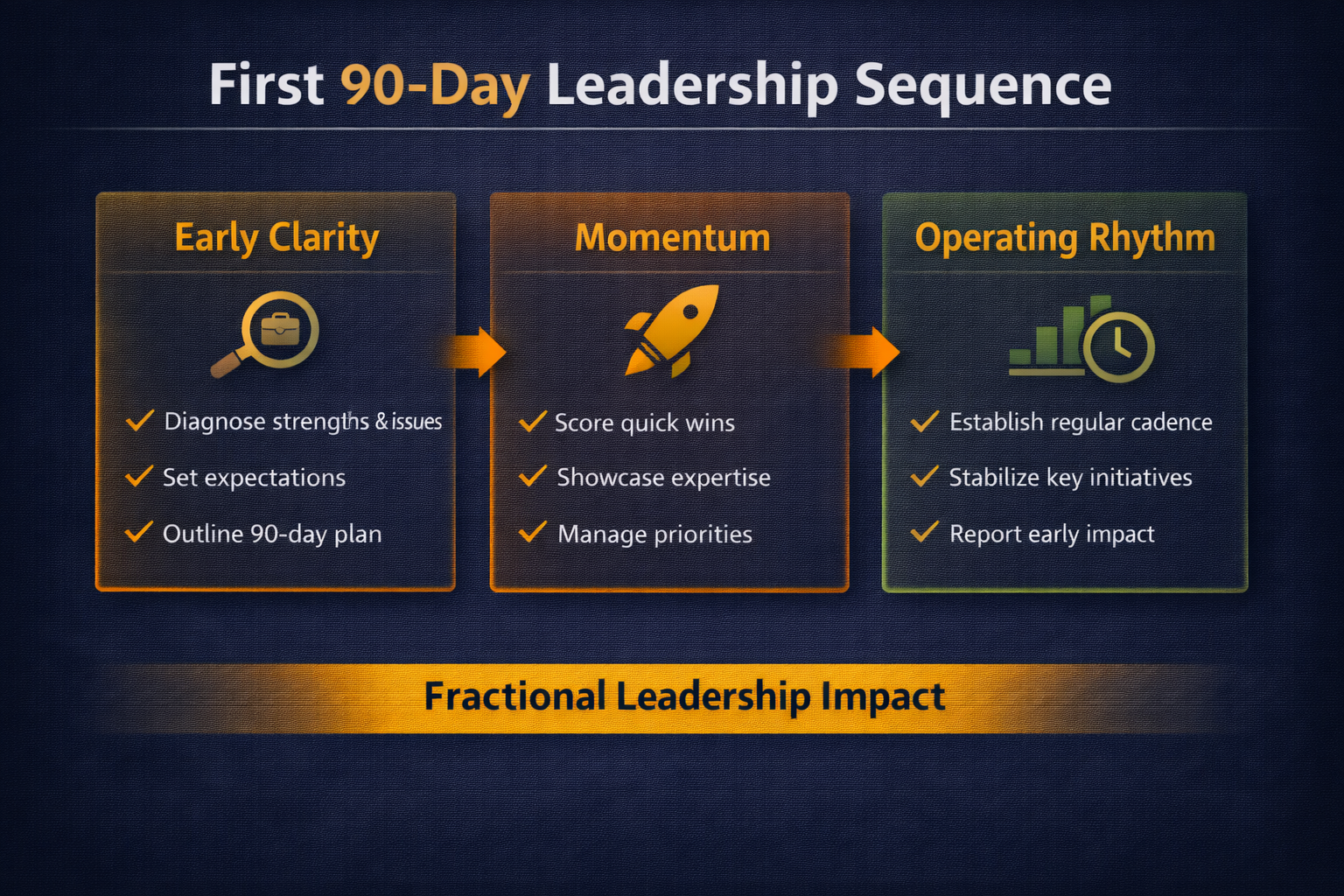
The first 90 days matter because they shape executive confidence in the engagement. If leaders see clearer ownership, faster decisions, and better visibility into risks, trust builds quickly. If they only see activity and meetings, confidence erodes.
Fractional leadership is often brought in during complexity, uncertainty, or drift. The opening phase must reduce noise fast enough that executives can feel the difference before deeper work unfolds.
- Early clarity determines whether the engagement earns credibility.
- Momentum builds trust faster than presentation decks alone.
- The first 90 days should translate strategy into a practical operating model.
- Executives need visible signals that priorities and ownership are tightening.
What changes first
The first improvements are usually not large platform changes. They are leadership and operating improvements that make better execution possible.
Decision ownership gets sharper
One of the earliest benefits is a cleaner decision path. Executives should see fewer unresolved issues bouncing between teams and more clarity around who owns what.
- Decision rights become visible.
- Escalation paths become faster and cleaner.
- Work no longer waits on vague shared accountability.
Visibility into risk improves
Fractional leadership should quickly surface what matters most. Leaders should not have to guess where the highest operational, delivery, or vendor risks sit.
- Top blockers become visible earlier.
- Open risks are named in business terms.
- Tradeoffs are easier to understand and act on.
What leaders should receive
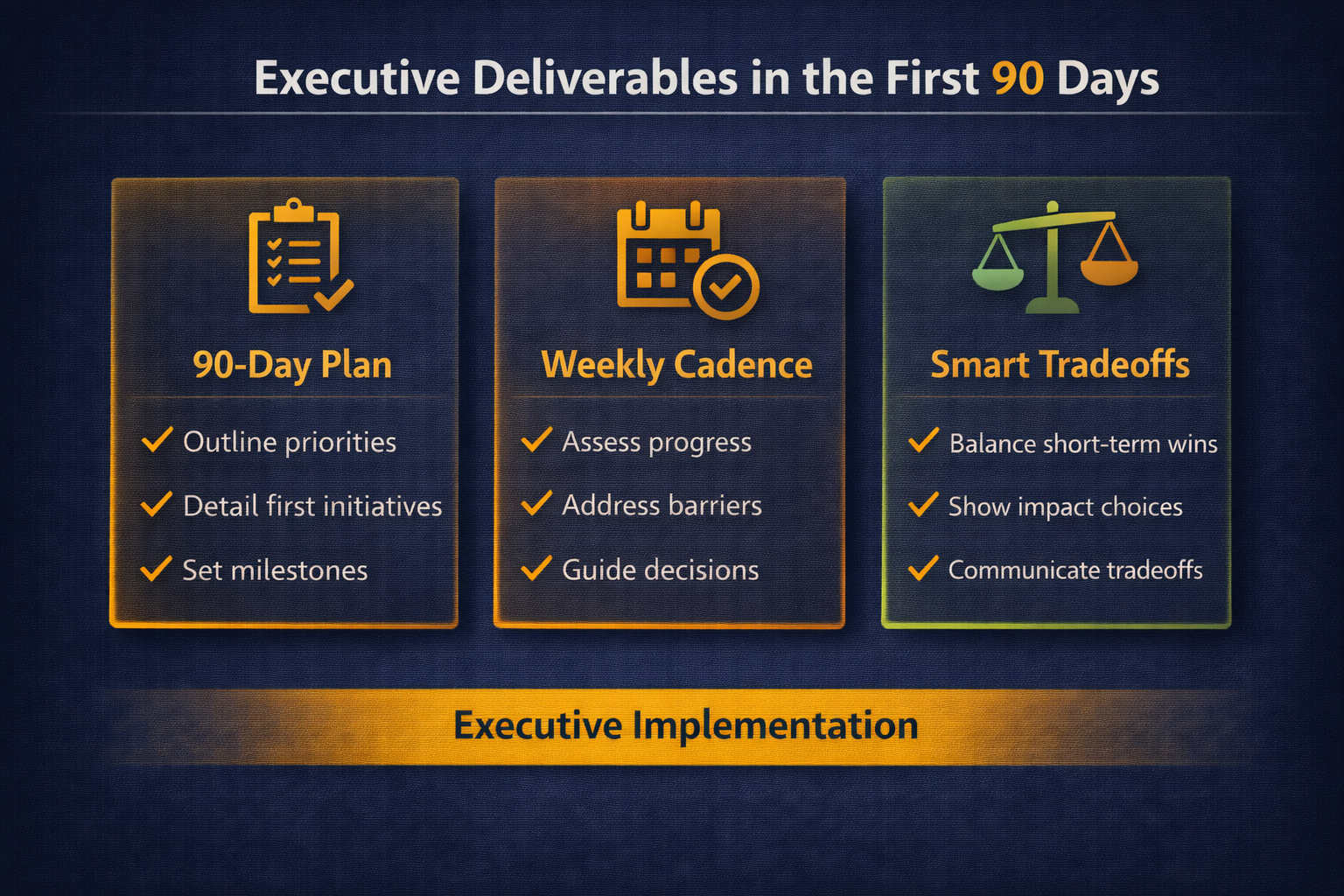
A strong engagement produces more than advice. It produces a practical operating model executives can see and use.
A clear plan
- A short assessment of current priorities, blockers, and risks.
- A defined near-term plan with 30, 60, and 90 day milestones.
- A view of what work should accelerate, pause, or stop.
A defined cadence
- Weekly leadership reviews focused on decisions and blockers.
- Monthly operating views tied to outcomes and risk.
- A stable rhythm that executives can trust.
Transparent tradeoffs
- What is being prioritized and why.
- What is being delayed, reduced, or retired.
- What risks are acceptable for now and which need action.
How to measure success
Executives should not measure success only by completed tasks. The more useful question is whether the environment is becoming easier to lead and easier to execute in.
- Improved focus. Fewer scattered priorities and stronger sequencing.
- Early wins. Visible movement against blockers, accountability, or delivery issues.
- Reduced noise. Less confusion, fewer circular escalations, and fewer decisions hanging open.
- Clearer ownership. Better understanding of who owns decisions, workstreams, and outcomes.
- More stable cadence. Reviews that lead to action instead of repeated status loops.
A practical 90-day sequence
Days 1 to 30
- Assess current priorities, delivery issues, and leadership gaps.
- Clarify immediate risks, decision bottlenecks, and ownership ambiguity.
- Stand up a simple operating cadence with visible action tracking.
Days 31 to 60
- Reduce initiative overload and tighten sequencing.
- Clarify the tradeoffs behind current priorities.
- Show early wins through faster decisions and clearer accountability.
Days 61 to 90
- Stabilize the operating rhythm and improve executive visibility.
- Confirm the next phase plan with owners, milestones, and risks.
- Hand leaders a clearer model for ongoing governance and execution.
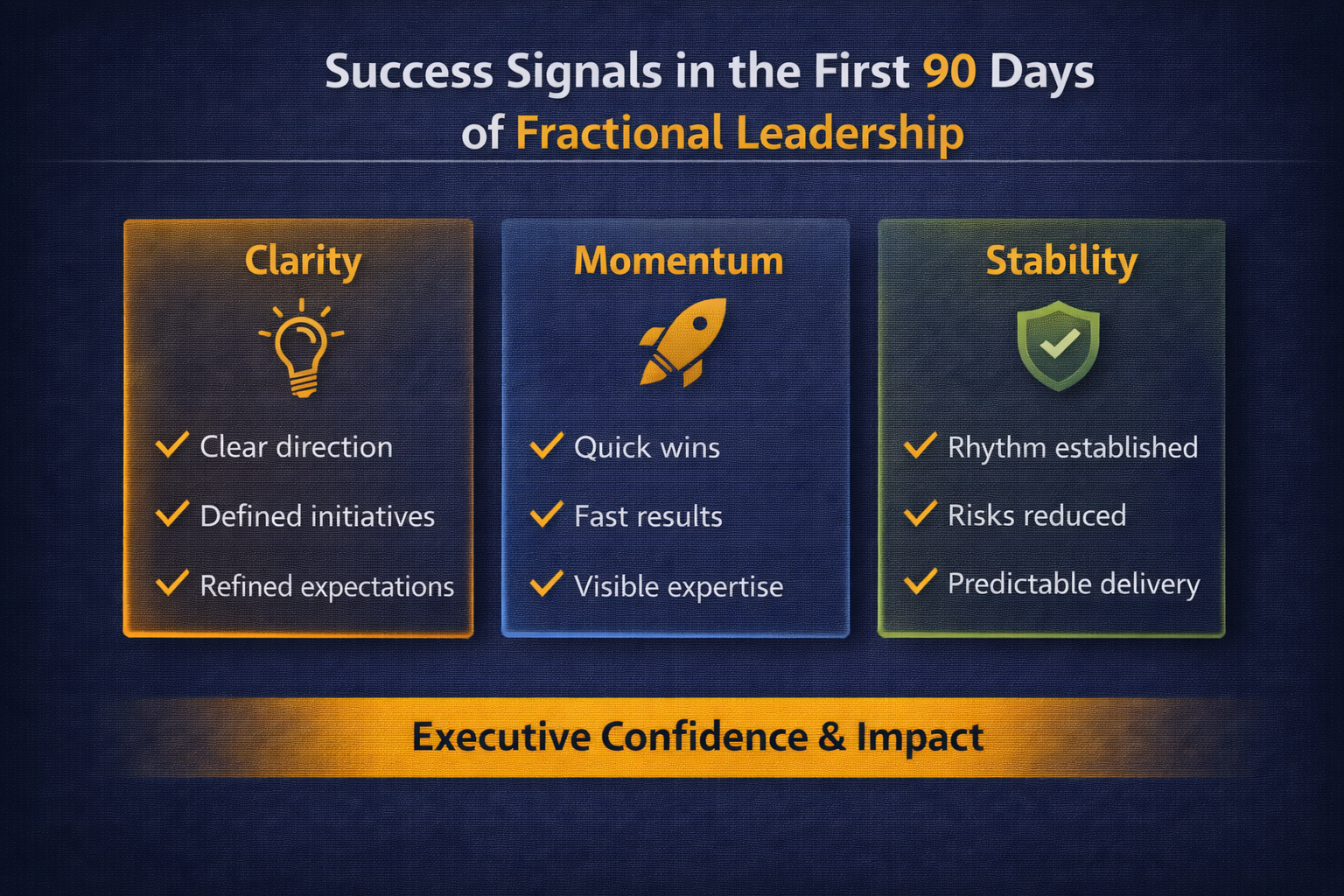
Quick answers for executives hiring fractional leadership
- The first 90 days should reduce uncertainty. Leaders should feel more clarity, not more noise.
- You should expect structure quickly. A clear cadence and clearer ownership should show up early.
- Early wins matter. They prove the engagement is producing useful movement.
- Success should be measurable. Focus, decision speed, visibility, and trust should improve.
Frequently Asked Questions
What should executives expect in the first 30 days of fractional leadership?
In the first 30 days, executives should expect a rapid assessment of priorities, risks, delivery blockers, ownership gaps, and a clear operating rhythm for decisions and follow-through.
What should be visible by day 60?
By day 60, leaders should see clearer ownership, a stabilized review cadence, reduced noise around priorities, and a small set of measurable actions moving against the agreed outcomes.
What should executives receive during the first 90 days?
Executives should receive a clear plan, defined cadence, documented risks and tradeoffs, ownership clarity, and a practical milestone path for the next phase of delivery.
How should success be measured in the first 90 days?
Success should be measured through improved focus, faster decision flow, clearer accountability, visible early wins, and reduced operational noise around priorities and execution.
What makes the first 90 days of fractional leadership effective?
The first 90 days are most effective when the leader establishes outcome clarity, decision discipline, visible ownership, and a steady operating cadence tied to business value.
Need a clearer start to fractional leadership support
If you want faster clarity around what the first 90 days should produce, a focused working session can define the right milestones, cadence, and ownership model before the engagement drifts into noise.
Book a consultation